Don’t stop here
There’s much more to discover!

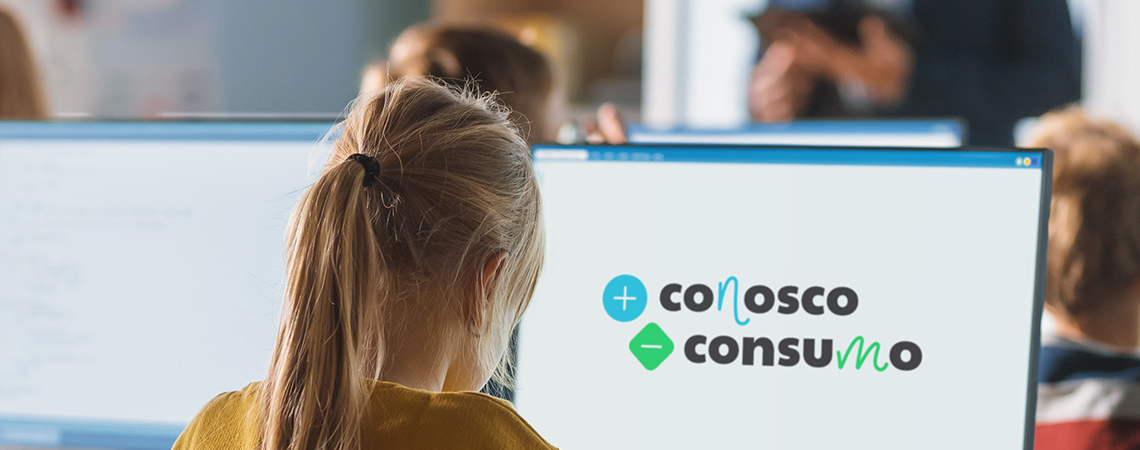
The project that brings topics such as the efficient and informed use of energy, the energy transition and the digital transition into primary schools.
In a rapidly changing world where reducing energy consumption and raising digital awareness are crucial challenges, Plenitude invests in the development of skills and talents of children and adolescents. Through the project "The more I know, the less I consume”, launched in collaboration with FEEM (Fondazione Eni Enrico Mattei), Eniscuola, and ANP (National Association of Public School Leaders and Senior Professionals), responsible energy and technology use is promoted from primary school onwards. This commitment is renewed with the third edition of the project, launched in Rome at the Eni Conference Center on October 15, alongside the awarding of schools that participated in the previous edition.
«We are very proud that Plenitude supports the project “The More I Know, The Less I Consum” which allows us to concretely express our commitment to spreading the culture of conscious and efficient energy use. This is one of the common benefit purposes stated in our company statute as a Benefit Corporation, with a particular focus on younger generations».
«The project “The more I know, the less I consume” - says Pasquale Pesce, Sustainable Development Projects Manager at Plenitude - aims to increase the competencies of students and teachers to make more mindful choices regarding energy use, digital technologies, and online presence quality in general».
In the 2023/2024 school year, the project involved 1,900 children and 230 teachers and school leaders from 27 primary schools across 9 regions.
«Eniscuola has always been committed to supporting educational initiatives focused on the importance of energy and the environment. Through a simple and effective approach, the “Più conosco, meno consumo” project educates younger generations and raises awareness of important topics such as digital innovation and energy efficiency, using an innovative teaching method.».
«The project offers pupils specific learning pathways covering digital innovation, including coding and Arduino programming, and the efficient use of energy resources, including reducing consumption, electric mobility and digital ethics. The approach combines STEAM, an acronym for Science, Technology, Engineering, Art and Mathematics, with computational thinking and robotics. By learning computer languages, designing algorithms, programming Arduino boards, developing data literacy and exploring Artificial Intelligence, classes are asked to create an analogue or digital artefact and draw up a manifesto on the responsible use of environmental and digital resources. Through ‘Più conosco, meno consumo’, we want to demonstrate how greater awareness can guide more informed everyday choices regarding energy consumption and the use of technology,” continues Pasquale Pesce, offering a preview of some new features in the third edition.
The positive feedback received and new trends in the digital world have led us, on the one hand, to confirm the value of the path undertaken and, on the other, to innovate the educational programme by also including topics related to Generative Artificial Intelligence, providing participating pupils with new knowledge and easily accessible innovative tools».
«This project also has another important value, which is the promotion of diversity in STEAM fields. The active participation of over 1,000 young female students in the 2023/2024 school year, who engaged in basic robotics and coding, represents a concrete push for female participation in the development of so-called “digital humanities”».
Alfonso Benevento, Scientific Coordinator of the Project and ANP Member, answered some questions about the project, offering his perspective on the experience that students and teachers had during the phases of “The more I know, the less I consume”.
1) What is the level of interest and awareness among students on sustainability topics?
«Often, younger children know little about these topics because they are not yet widely discussed in schools. The project fills this gap with a gradual approach that introduces children to key concepts in a simple and engaging way, grounding abstract topics in their daily reality. The integration of the digital dimension, using tools like Arduino and artificial intelligence, further amplifies their interest. Think of the enthusiasm that arises in the classroom when experimenting with robotics».
2) How were the schools that stood out and were awarded on October 15 identified?
«We awarded schools that demonstrated not only learning but also teamwork, collaboration, and knowledge sharing, including community involvement. For example, some schools transformed Safer Internet Day into a widespread day of environmental and digital sustainability, while others organized public events to showcase their work. Initiatives like these raise awareness of more efficient energy use within local communities and encourage greater attention to energy consumption.».
3) Can the project help schools themselves to integrate STEAM topics into their curricula?
«Certainly. With robotics, coding, and computational thinking, “The more I know, the less I consume'”represents a real paradigm shift, opening new educational scenarios where technology becomes a tool for active and engaging learning. Teachers can experiment with new methodologies, and the enthusiasm of students and parents confirms the effectiveness of this approach, which prepares young people with future skills and motivates them to learn».
4) What is the project's impact on students and families in terms of engagement and learning?
«It has been truly remarkable, as demonstrated by the exponential increase in participants, and it involves not only students but also their families. Many parents, like a mother who wrote to us, have discovered Plenitude's commitment to youth education and the promotion of energy models. Her words, “The more I know, the less I consume” is educating my son and, consequently, me as well,' perfectly encapsulate the project's deep impact at the family level».
There’s much more to discover!
Plenitude supports the CESVI Foundation in Case del Sorriso program, dedicated to children, adolescents, and young women in difficulty, to promote fundamental rights.
At the sixth Plenary Assembly of the Banco dell’energia Foundation, new projects for 2025 were unveiled, along with updates on ongoing initiatives.
Study support, STEM (Science, Technology, Engineering, and Mathematics), local culture: the three areas of intervention of the project, which involved six Italian cities.