Don’t stop here
There’s much more to discover!


The energy system is changing its language. Here is a guide to help navigate the fundamental concepts that define the transformation of the electricity system, empowering everyone to become an informed protagonist of the energy transition.
Understanding the new “energy vocabulary” is not just a technical exercise, but the first step toward becoming an active and aware participant in a transformation that affects us all. Here is a glossary to navigate the key concepts of energy flexibility.
Aggregator (or BSP – Balancing Service Provider)
A market operator that acts as an intermediary by grouping together a set of distributed energy resources (such as home batteries, electric vehicles, or industrial plants). By creating an aggregated portfolio, it can offer a significant and reliable package of flexibility to grid operators, acting as a single Virtual Power Plant (VPP).
BEMS (Building Energy Management System)
An intelligent building management system. Essentially, it is the technological “brain” that, through sensors and software, monitors and optimizes a building’s energy consumption (commercial, industrial, or residential), automating systems such as heating, cooling, and lighting to maximize efficiency.
BRP (Balance Responsible Party)
An entity such as Plenitude financially responsible for keeping in balance the energy it schedules to inject into or withdraw from the grid with the energy actually exchanged. To avoid imbalance costs, the BRP buys or sells energy, typically on the Intraday Market, to correct its forecasts in real time.
Consumer
The traditional profile of the energy user, who simply draws and consumes energy supplied by the grid. In the new paradigm, even consumers can provide flexibility through intelligent load management (Demand Response).
Curtailment
The deliberate and controlled reduction of energy production from a plant, typically a renewable one. This technical action is requested by the grid operator to prevent overloads and congestion when production exceeds the grid’s ability to absorb it.
Demand Response
The ability of final consumers to modify their consumption profile in response to an external signal (price-based or command-based). It does not mean consuming less, but consuming smarter in ways that better align with the needs of the system.
DSO (Distribution System Operator)
The operator responsible for medium- and low-voltage grids the “last mile” infrastructure that delivers electricity to homes and businesses. Its flexibility needs are tied to resolving local issues, such as line congestion.
Energy Flexibility
The capability to actively modulate, in response to a signal, the profile of energy production and/or consumption. It is the key resource for ensuring balance and stability in an electricity grid with an increasing share of intermittent renewable sources.
Distributed Generation
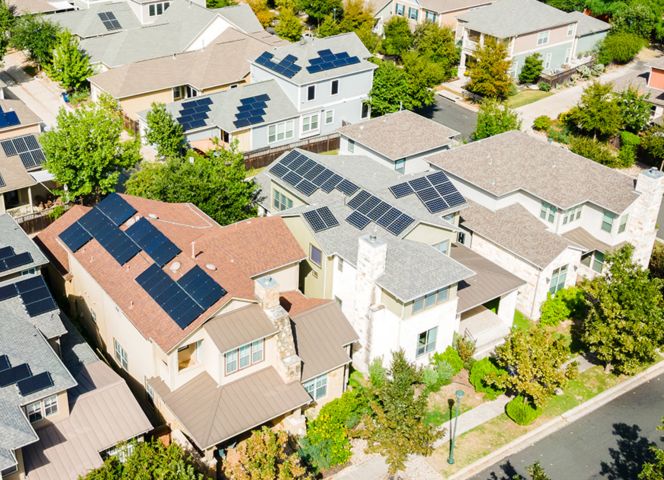
An energy production model in which electricity is generated by numerous small plants spread across the territory (such as rooftop solar), near the consumption points. This contrasts with the traditional model based on a few large centralized power stations.
Intermittency
The intrinsic characteristic of renewable sources like solar and wind, whose production is neither constant nor fully predictable, but depends on variable weather conditions. Intermittency can cause grid instability the main technical challenge energy flexibility aims to solve.
Capacity Market
A market where energy producers and flexible resources are remunerated not for the energy they generate, but for their availability to provide a certain generation or modulation capacity when needed, ensuring long-term system security and adequacy.
Intraday Market
The electricity market where trades take place close to real time (up to a few hours or minutes before physical delivery), allowing operators to adjust their positions and balance their portfolios to address unexpected discrepancies between supply and demand.
PGUI (Power Grid User Interface)
An interface device for the electricity grid. It connects a user’s installation with the distribution network, enabling precise measurement of energy flows and the reception of commands for the activation of flexibility services.
Prosumer
A user who combines the roles of producer and consumer. Thanks to their own system (typically photovoltaic), they produce the energy they consume and feed any surplus back into the grid.
Prosumager
The evolution of the prosumer. In addition to producing and consuming energy, they have a storage system allowing them to store energy and manage it more actively and flexibly, becoming the most advanced profile for participating in energy markets.
Smart District
An intelligent district or neighborhood. It is the urban-scale evolution of the energy community an ecosystem where flexible and intelligent energy flows become the nervous system of an interconnected community, enabling innovative services that enhance quality of life.
Smart Meter
The intelligent electricity meter an electronic device that measures energy consumption and transmits data at frequent intervals to the distributor, enabling billing based on actual consumption, time-of-use tariffs, and active demand management.
Storage (Energy Storage Systems)
Systems such as batteries (BESS – Battery Energy Storage Systems) that allow electrical energy to be stored and released at a later time. They are essential for decoupling the moment of production from the moment of consumption, making energy from intermittent sources dispatchable.
TIDE (Integrated Electricity Dispatching Code)
The regulatory framework defined by ARERA governing the operation of the dispatching service market in Italy. TIDE is evolving to open participation in flexibility markets to smaller and more distributed resources.
TSO (Transmission System Operator)
The operator responsible for the national high-voltage transmission grid and for ensuring security and balance across the entire electricity system. In Italy, the TSO is Terna.
V1G (Vehicle-one-Grid)
A technology enabling smart charging of electric vehicles with a unidirectional energy flow from the grid to the vehicle. A V1G-enabled car can modulate charging time and power based on external signals, optimizing charging costs and contributing to grid stability.
V2G (Vehicle-to-Grid)
A technology enabling bidirectional energy exchange between electric vehicles and the grid. A V2G-enabled car not only charges its battery but can also feed stored energy back into the grid, acting as a mobile storage system providing flexibility services.
VPP (Virtual Power Plant)
A Virtual Power Plant is a software-based system that aggregates and coordinates a portfolio of distributed energy resources (generation plants, storage systems, and flexible loads), making them operate as a single large power plant.
There’s much more to discover!
Energy flexibility is transforming the power grid into an intelligent ecosystem where everyone’s choices from home to mobility to industrial production become central.
From simple users to active players: here’s how prosumers are transforming the energy system through production, sharing, and flexibility.
From smart homes to smart grids, discover how digital technologies make energy intelligent, improving efficiency and reducing waste.