Energy Comes Closer: the Energy Community

30 January 2025

View of CER

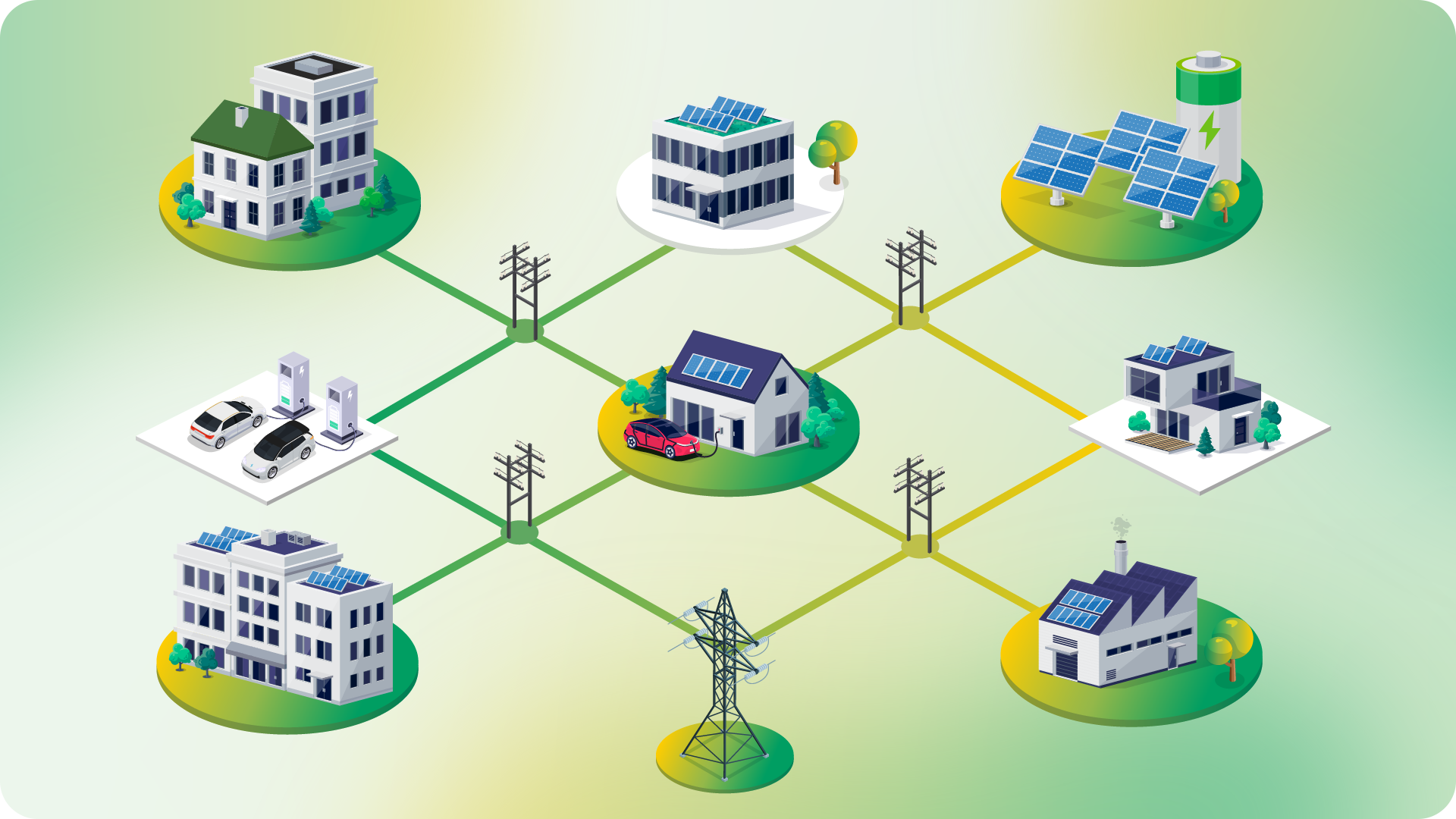
An Energy Community is a collective self-consumption configuration of locally produced renewable energy, capable of creating an active and collaborative energy ecosystem. In everyday life, we can imagine it as a virtual network for energy sharing that connects public and private buildings, homes, businesses, and schools. Thanks to photovoltaic systems, the energy produced is no longer just a resource for those who generate it, but becomes a shared asset for the entire community.

It is within this slice of reality that the concept of the Energy Community becomes concrete. What makes it alive and active are its participants: prosumers, who produce and self-consume energy, and consumers who, even without owning a system, play an equally fundamental role. Their conscious participation—through the mechanism of simultaneity between the energy fed into the grid by prosumers and the energy drawn by consumers—makes it possible to maximize distributed self-consumption and contribute to balancing renewable energy production on the grid. Together, they become energy citizens: aware protagonists who, by acting collectively, bring the energy transition into everyday life.

Configurations: the different forms of shared energy

Although the landscape of Energy Communities is diverse, all configurations are based on two fundamental principles: the objective—namely to produce, consume, and share energy from renewable sources while generating economic, environmental, and social benefits—and the geographical perimeter, defined by the area served by the same primary substation. This substation not only transforms and distributes medium-voltage electricity, but also acts as the virtual boundary for CACERs.

Italian regulations group the different models under the acronym CACER (Configurations for Self-Consumption and Sharing of Renewable Energy). This framework encompasses and defines all the ways in which energy can be locally produced and shared, based on three key mechanisms: decentralized production, local self-consumption, and the sharing of energy injected into the grid among different participants.

Within this shared perimeter, three main configurations are identified, all of which are eligible for state incentives designed to meet different needs.

While AUC and AID involve more clearly defined limits, membership in a Renewable Energy Community (CER) is, by definition, open to a wide range of actors. Eligible members include individuals, Small and Medium-sized Enterprises (SMEs), territorial bodies and local administrations, research institutions, religious organizations, and third-sector entities. Within the community, these members can take on different operational roles.

Anatomy of an Energy Community

Distributed self-consumption configurations are structured as an ecosystem in which people, supported by technology and a defined regulatory framework, interact toward a common goal: energy sharing. The protagonists of this model are the participants themselves, who act in different but complementary roles: consumers and prosumers. Regulations also allow for the inclusion of “third-party producers”: external entities that make the energy produced by their plants available to the community.

Guiding this interaction is the Referent: the individual or legal entity responsible for technical and administrative management and the sole interface with the GSE (Gestore dei Servizi Energetici). Depending on the type of configuration, this role may be assumed by the community itself, one of its members, the condominium administrator, or delegated to a third party. In the latter case, this role is fulfilled by an ESCo (Energy Service Company, UNI 11352 certified), which may act as manager only if it is also the third-party producer supplying energy from its own plant to the configuration.

Technology: from sharing to flexibility

The backbone of a CACER is renewable energy generation, most often provided by photovoltaic systems. The objective of the model is distributed self-consumption, whose economic benefit is generated through the simultaneity mechanism between the energy injected into the grid by producers and the energy withdrawn by consumers.

To maximize this outcome, the first step is the proper design of the configuration, strategically balancing production and consumption. Alongside this, Digital Energy plays an important role: although complex management platforms and smart meters for every user are not mandatory—given the costs, which are not always sustainable, especially for AUC configurations—monitoring energy flows remains a key element. Providing members with clear data, for example via an app, is essential to raise awareness and encourage behavioral changes (such as scheduling consumption during peak production hours) that make the community more efficient.

A separate chapter, rich in potential, is that of flexibility. To enable CACERs in the future to provide real services to the grid, technologies that are not essential today—such as energy storage systems (BESS) and advanced management platforms—will become central. Batteries and flexibility are a crucial pairing on which the future of the energy system is being built, and a space in which self-consumption configurations can continue to evolve.

The future is shared: the benefits of Energy Communities

The success of Energy Communities lies in their ability to generate shared value, positioning themselves as a true engine of sustainable development for local territories.

The most immediate benefit for members is economic: shared energy reduces energy costs while increasing the energy resilience of the local community.

However, it is in the social dimension that self-consumption configurations fully express their strength. Sharing is not a passive act; it becomes a collective commitment that fosters individual responsibility, encouraging each member to “do their part” through more conscious use of resources. This approach promotes inclusion and creates new opportunities for collaboration among citizens, businesses, and public bodies.

By managing energy as a common good, a sharing economy is created that redistributes the value generated. From this perspective, the spread of renewables is not only an environmental goal, but the direct consequence of a more conscious and genuinely participatory development model.

Plenitude-branded projects

Plenitude’s commitment to Energy Communities is reflected in concrete projects built on solid experience. As early as 2021, with pilot initiatives such as the EvoNaRse collective self-consumption project in Naples, the technologies that now underpin energy communities were tested in real-world conditions. Today, this expertise is translated into large-scale solutions, particularly in the Remote Individual Self-Consumption (AID) configuration, as demonstrated by the project for Nuova Simplast.

Nuova Simplast

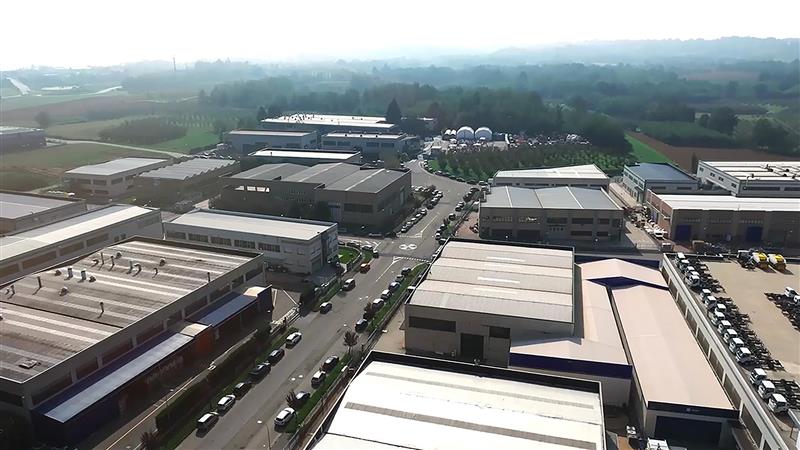
In collaboration with this company specializing in plastic molding, Plenitude is developing a 758 kWp photovoltaic plant in Montà d’Alba (CN), which will virtually share the energy produced with five Nuova Simplast supply points. This will enable access to the twenty-year state incentives provided by law for CACERs, part of which will be allocated—as required by regulations—to support social initiatives in the local area.
History and regulatory evolution

The concept of distributed and shared energy production is not new; its roots lie in the first energy cooperatives established in Europe over a century ago. However, the difference between those pioneering experiences and today’s communities is not only regulatory, but qualitative. While the original objective was mainly mutualistic—bringing electricity where it did not exist—today we are faced with a far more complex and interconnected model. This transformation has been made possible by technological maturity and a new strategic vision: the idea is not just to produce energy, but to actively manage it, turning a long-marginal phenomenon into a pillar of European energy strategy.

The regulatory path that enabled this qualitative leap has been marked by several key milestones:

Target raggiunti e prospettive future

European directives

The Clean Energy for All Europeans Package (in particular the RED II Directive in 2018 and the IEM Directive in 2019) introduced and defined for the first time the concepts of Renewable Energy Communities (REC) and Citizen Energy Communities (CEC), recognizing their key role in achieving decarbonization targets.

The experimentation phase in Italy

  • The first regulatory step in Italy came with the Milleproroghe Decree (DL 162/2019), which launched an experimental phase and enabled the creation of the first modern energy communities.

Definition of a comprehensive framework

  • Subsequently, Legislative Decree 199/2021 structurally transposed the European directives, defining the complete regulatory framework for distributed self-consumption.

ARERA’s intervention with the TIAD

  • At the end of December 2022, the Energy Authority (ARERA) published the TIAD (Integrated Text on Distributed Self-Consumption), later amended in 2024. This fundamental document defined the methods for valuing distributed self-consumption for the configurations provided for by Legislative Decrees 199/21 and 210/21.

Full operational status

  • The final step was the issuance of Ministerial Decree No. 414/23 (the CACER Decree), which defined incentive tariffs and access to PNRR funds. This was followed by the publication of the Operational Rules (OR) by the GSE, governing the concrete procedures for accessing benefits within a regulatory framework destined to evolve with future amendments.

Energy for the community

In the past, in mountain villages, the community oven was the heart of social life. Families brought their bread to be baked, optimizing the use of a precious resource—energy—for a shared benefit. Energy Communities revive that same principle today: optimizing a resource—energy produced from renewable sources—to create an advantage for the entire community.

In this way, energy comes closer: not only because it is produced locally, but because, like bread in the past, it is shared intelligently. This model embodies their dual value—both strategic and social—as a tool for the energy transition and, at the same time, as a project of social cohesion capable of building a future that is closer to people.

Other related articles

BUSINESS STORIES - 04/03/2025
Solar energy: from the photovoltaic effect to energy communities

You don’t need to consult the stars to understand this energy: just look up at the sun to see things clearly. Let’s begin a journey that starts with a single ray of sunlight and leads to self-produced, shared energy, exploring a technology