
At Plenitude, we believe that sustainability means not only reducing the environmental impact of our activities, but also creating value for people and the community. That’s why we invest in projects that promote social inclusion, access to education, equal opportunities and collective well-being. This vision is what drives our support for Frequenza 200: a program promoted by WeWorld, a non-profit organization committed to defending the rights of the most vulnerable individuals. The program aims to combat educational poverty and restore the central importance of the right to education by promoting inclusion, well-being and equal opportunities for pre-adolescents and adolescents living in areas affected by social exclusion, school dropout, and a lack of guidance or role models.
Our support has helped Frequenza 200 grow, enabling the launch of new educational activities, the expansion of study spaces, and the engagement of more at-risk youth, enhancing education as a tool for inclusion and support for change.
The project focuses on addressing educational poverty among young people aged 11–25 in different neighbourhoods in 7 Italian cities: Milan (neighbourhoods of Barona, Giambellino, Corvetto and Ponte Lambro), Rome (San Basilio), Cagliari (Sant’Elia), Naples (Scampia), Catania (San Cristoforo), Bologna (San Vitale) and Aversa. The initiative combines academic support (after-school programs, tutoring, homework help) with actions aimed at listening and improving the psychological well-being of adolescents through dialogue and support services, as well as youth empowerment programmes. More than 1,300 young people have been supported in developing skills and independence to “take back their future”.
Additionally, Frequenza 200 centres remain open during the summer months – a critical time for students at risk of dropping out – offering continuity in education and a steady presence in the community even during school breaks.
Discover the activities of Frequenza 200 and how they’ve supported everyone involved.
Project beneficiaries: 300 girls and boys*
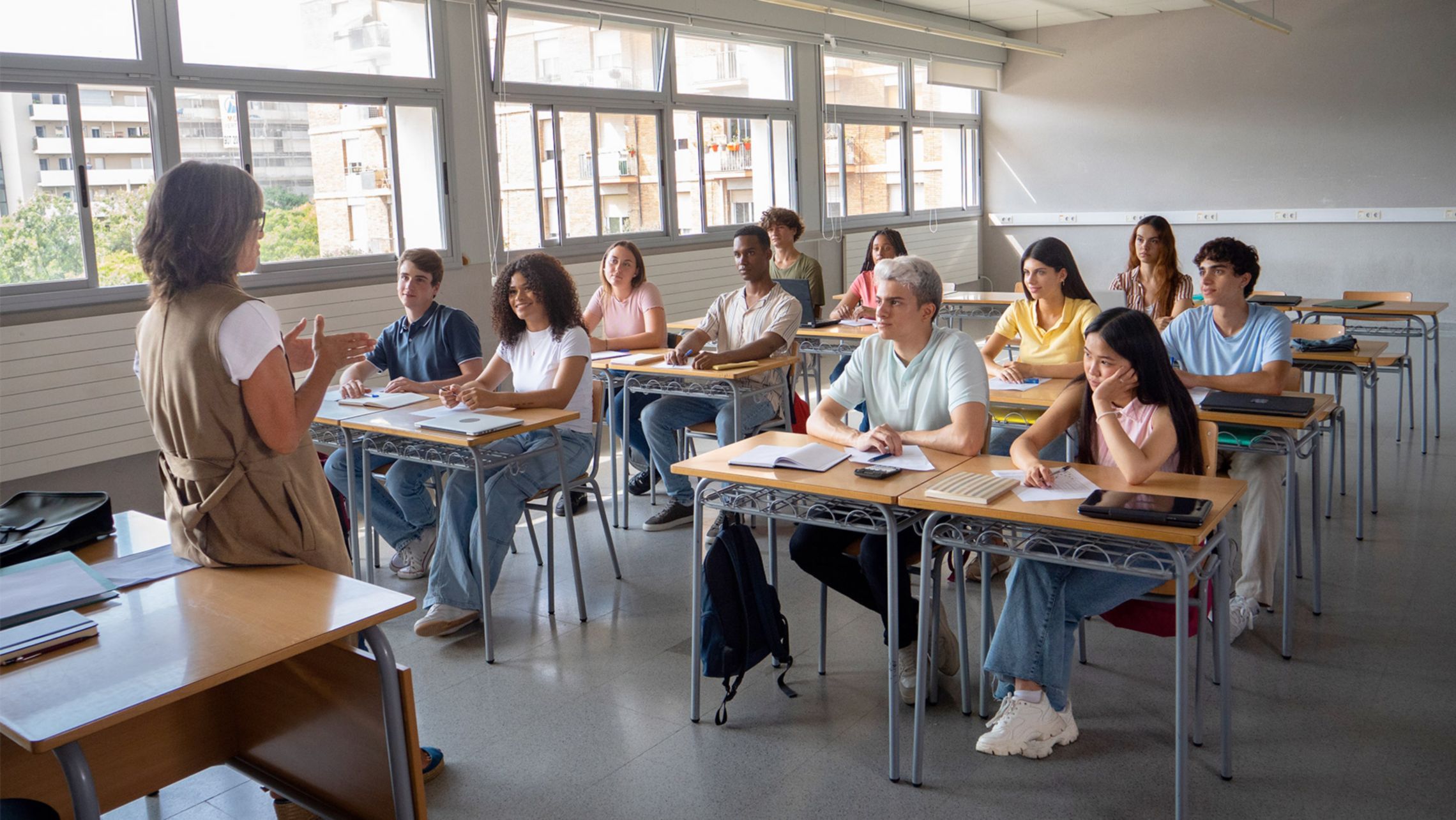
Educational continuity outside the classroom at the Frequenza 200 Educational Centres allowed children aged 6 to 14 to receive after-school support, where they could develop new learning methods and approaches to studying.
Project beneficiaries: 200 girls and boys*
To boost motivation among students attending the educational centres, a wide range of experiences and activities were organized, such as museum visits, exhibitions, field trips, creative workshops in art, music, photography, robotics, STEM and video editing.
Project beneficiaries: 39 girls and boys*
A free, neutral space designed to reach young people who have dropped out of school or no longer attend, offering a welcoming environment where they can feel comfortable accessing support without fear of judgement from their peers, thanks to the assistance of psychologists.
Project beneficiaries: 26 girls and boys*
With the introduction of Case Manager role to support student tutoring, it was possible to establish a dedicated point of reference. This role interacts with local networks and institutions, making it easier to identify and assist those most in need in a timely and effective way.
Project beneficiaries: 144 girls and boys*
In five neighborhoods across Milan, Rome, and Aversa, where the Frequenza 200 educational centers are active, spaces dedicated to creativity and physical activity were created through events and courses in urban sports, urban art, and team sports. These activities were designed to encourage free artistic expression, physical well-being and social interaction by engaging young people in positive and inclusive experiences.
Project beneficiaries: 24 girls and boys*
A pilot project dedicated to adolescent empowerment was launched in Naples and Bologna, with the aim of bringing out their interests and ideas to co-design initiatives, events, and spaces where they can take the lead.
*The number of beneficiaries will be updated periodically based on quarterly report data.