Don’t stop here
There’s much more to discover!

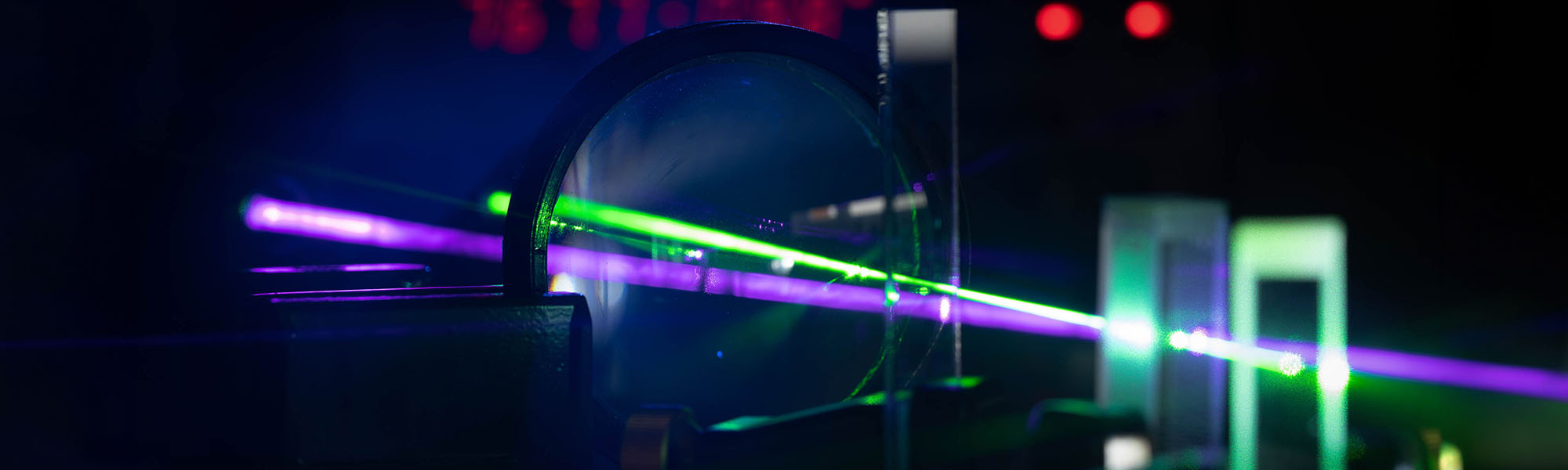
From photons striking a sensor to the illusion of cinematic motion: a journey through light as it becomes art.
Let us imagine stepping into a dark cinema auditorium or observing a photographic print in a silent gallery. The experience feels contemplative, almost static. Yet, from a strictly physical standpoint, we are witnessing a transfer of energy: light reaches our eyes and is transformed into neural signals. Every cultural expression, even before becoming an intellectual concept, is a physical phenomenon — a flow that travels from a source to a receiver. But art is much more than that: in its deepest essence, it is a catalyst for the mind and the senses.
It is within this idea of energy as a driver of connection that Plenitude’s vision is reflected: supporting culture does not simply mean backing an activity, but ensuring that this vital flow of knowledge and innovation continues to circulate, reaching the widest possible audience.
It all begins with an elementary particle, massless yet charged with energy: the photon. When we look at a photograph, we are witnessing a luminous event recorded in the past and made visible in the present. Taking a photograph is not a passive act, but an act of capture: light energy travels through space until it strikes a sensitive surface, where it is absorbed and transformed.
In analog photography, this encounter alters matter itself: light triggers a chemical reaction on the silver halide crystals of the film, imprinting a latent image ready to be developed. Today, in the digital age, the principle remains the same but the process changes: photons strike the sensor and generate an electric charge. This is the same physical principle behind the photoelectric effect, the discovery that earned Albert Einstein the Nobel Prize. In both cases, photography is proof that energy has been halted, “frozen” onto a medium, ready to be reactivated by our gaze—even years later.
If photography is the energy of a single instant, cinema is the manipulation of that energy over time. Yet the magic of the big screen conceals a scientific truth: the movement we see is not, in fact, a continuous flow. Whether on film or in digital form, cinema is simply a sequence of still images presented in rapid succession.
The fluidity of action is entirely processed within our bodies. The projector delivers a sequence of 24 frames per second, interspersed with moments of darkness that our brain ignores. Thanks to visual system integration mechanisms such as retinal persistence, our eyes “retain” the luminous imprint of the previous image and merge it with the next, filling in the gaps. We, the viewers, complete the circuit: without our brains transforming intermittent impulses into a continuous flow, cinema would remain a disconnected series of slides. It is a perfect example of biological efficiency: the energy of light triggers the energy of perception.
As we have seen, vision is an act of transformation: light impulses that—through an exchange of energy—become meaning. Supporting those who make this process possible means, for Plenitude, nurturing a resource as essential as electricity: collective imagination, capable of turning a physical place into a space for connection.
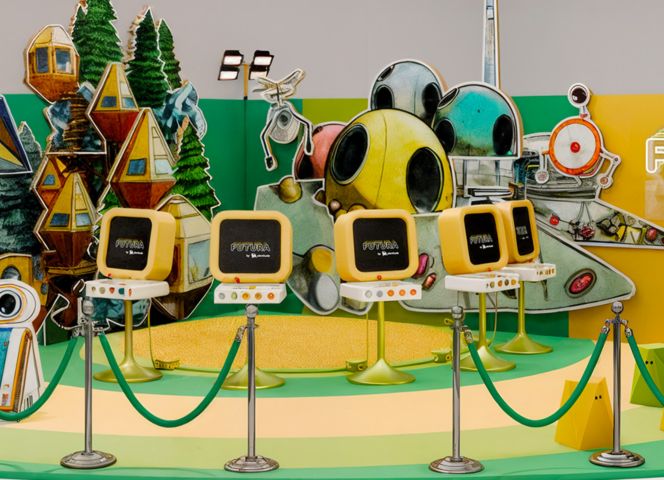
This is the spirit behind the long-standing partnership with CAMERA – Centro Italiano per la Fotografia in Turin, where the energy of images is studied to educate the eye, as well as the experiments carried out during Milan’s Fuorisalone, a context in which the company has explored new expressive frontiers between artistic and technological installations. A tangible example of this research was Feeling the Energy: a sensory journey that translates energy production into stimuli for the five senses, now permanently housed at Dynamo Camp.
This sensitivity is also reflected in the Goodnight Light project, designed to transform darkness into an embrace. Through an illustrated book printed with photoluminescent ink—visible only in the dark and appearing blank in lit environments—Plenitude offers a “Night-Light Companion” that reassures children without consuming electricity, relying solely on the natural light absorbed by its pages during the day.
This commitment is rooted in local communities, supporting cities that promote culture. Following its experience with Bergamo and Brescia 2023, Plenitude partnered with Agrigento, Italian Capital of Culture 2025, through structural interventions: from new LED lighting for the Cathedral of San Gerlando to the installation of solar panels for the Oratory of Santa Rosa and the Diocesan Museum MUDIA, as well as powering the Festivalle stage with batteries charged by renewable energy generated from photovoltaic systems.
Innovation in light management also extends to urban communication with Dark Mode Ads. The project is based on the use of dark modes on storefronts and LED screens in Plenitude stores across Italy and in Digital Out of Home spaces in Italy, Spain, and France, enabling energy savings of up to 74% compared to traditional formats. Plenitude reaffirms its commitment as a Benefit Corporation, raising awareness against energy waste and encouraging companies, brands, and industry players to reflect more broadly and collectively on the importance of reducing consumption—even in advertising.
Finally, the artistic charging stations of the Art in Motion Museum reshape urban design, while light enhances the value of ancient temples. The message is clear: the energy that powers the world runs parallel to the creative energy that moves emotions, along a shared path of innovation.
There’s much more to discover!
From the vibration of a string to the energy that powers a concert or music festival: the physical journey that transforms sound into a collective experience
It will be an opportunity to explore new digital spaces and discover Plenitude’s virtual planet and its story about the energy transition.
Applications are now open for a team of creators who, after a dedicated training program, will narrate the energy transition on Plenitude’s social media channels.