Don’t stop here
There’s much more to discover!


Turning effort into power and friction into thrust: a journey through the physical principles that govern athletic motion and measure its efficiency.
Observing an athlete at the peak of performance—refined through thousands of hours of training—creates an illusion of naturalness. And yet, in that instant, we are not just witnessing a sporting performance, but the real-time resolution of a physical equation. Before being strength and talent, sport is pure thermodynamics. It is energy management.
The human body, in fact, is a highly precise biological converter. Chemical energy, stored through metabolism, is burned and returned in the form of mechanical work and heat. Nothing is created, nothing is destroyed, everything is transformed: as taught by the first law of thermodynamics. The real challenge for an athlete is not just to produce energy, but to do so without wasting it. Victory is, essentially, a triumph of efficiency.
Consider the explosiveness of a sprint or the suspension of a jump under the basket. It is not just muscle strength: it is a rapid and intense dialogue between potential and kinetic energy. When an athlete bends their knees, they are literally loading a spring.
Tendons and muscles store elastic potential energy. The release is instantaneous: the spring snaps, energy becomes kinetic, and the body overcomes gravity. At the peak of the jump, in that fraction of a second when time seems to stand still, the transfer is complete: kinetic energy has dropped to zero, converted into gravitational potential energy. The one who dissipates less force rises higher.
In cycling, as in swimming, the resistance exerted by a fluid follows an unforgiving physical law: double the speed, and friction does not double—it quadruples. In water, which is about eight hundred times denser than air, this phenomenon demands massive energy expenditure for even the smallest acceleration. This is why a cyclist’s compact posture on the saddle or a swimmer’s perfect hydrodynamics are not stylistic quirks, but strict biomechanical necessities: they are essential to penetrate the medium while reducing the drag coefficient. The winner is the one who lets the fluid flow, who optimizes resources by minimizing friction.
In cycling, as in swimming, the resistance exerted by a fluid follows an unforgiving physical law: double the speed, and friction does not double—it quadruples. In water, which is about eight hundred times denser than air, this phenomenon demands massive energy expenditure for even the smallest acceleration. This is why a cyclist’s compact posture on the saddle or a swimmer’s perfect hydrodynamics are not stylistic quirks, but strict biomechanical necessities: they are essential to penetrate the medium while reducing the drag coefficient. The winner is the one who lets the fluid flow, who optimizes resources by minimizing friction.
Optimization, resource management, collective synergy. The vocabulary of sports physics echoes that of the energy transition. It is on this shared ground that Plenitude connects with sport, transforming the claim “Play for Change” into a tangible impact on territories and communities.
A commitment that takes shape in basketball with Olimpia Milano, where energy goes beyond the court to become social responsibility: from educational projects such as “Olimpia@School” to campaigns against gender-based violence, including “Ballshit” and “Parole Indelebili.”
The same drive for efficiency can be found in cycling, alongside La Vuelta 2025. As Main Sponsor and Energy Partner, Plenitude supported the 3,000 kilometers of the race by providing charging infrastructure for the fleet of accompanying electric vehicles. This focus on resources also extends to younger generations, through the sponsorship of the “Maglia Bianca” for the best young talent.
When performance reaches the extreme, innovation becomes essential. The collaboration with Red Bull has accelerated the energy transition of venues and events through targeted interventions. At the Red Bull Cliff Diving World Series in Polignano a Mare, the adrenaline of high diving was paired with an electric watercraft, demonstrating the effectiveness of zero-emission mobility even in aquatic sports. In Genoa, for the urban downhill of Red Bull Cerro Abajo, the company installed a solar-powered rack for charging e-bikes and equipped a local school with a new photovoltaic system, leaving a structural legacy for the city.
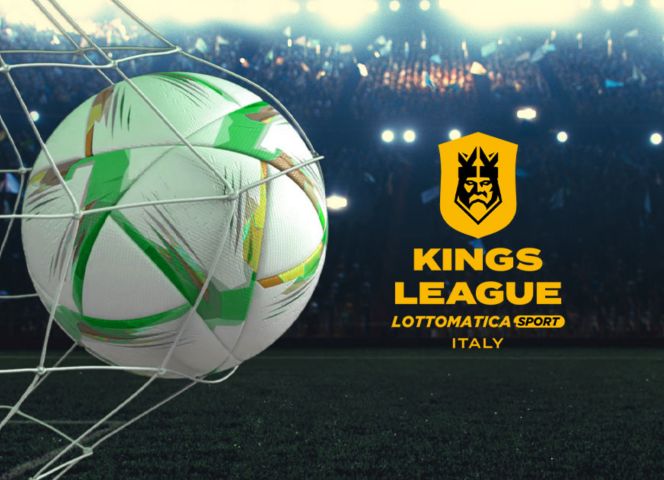
The energy of sport, finally, evolves and engages with new languages. Proof of this is the partnership with the Kings League, a hybrid format between seven-a-side football and the world of video games, capable of attracting 45 million viewers in 2025 and a digital ecosystem of over 220 million followers. After the finals in Turin, illuminated by an exclusive laser light show, Plenitude will support the competition for the next two seasons with a strong structural efficiency initiative.
At the arena in Cologno Monzese, a photovoltaic system of over 300 kW will be installed, alongside a charging station for electric vehicles. The intervention will be completed, in particular, by the supply of certified electricity, through Guarantees of Origin, as energy produced and fed into the grid from renewable sources.
Because in sport, just as in the evolution of our approach to energy, the finish line is only crossed by optimizing resources. And change is always a team effort.
There’s much more to discover!
From photons striking a sensor to the illusion of cinematic motion: a journey through light as it becomes art.
From the vibration of a string to the energy that powers a concert or music festival: the physical journey that transforms sound into a collective experience
The finals of the Kings League for Italy, France, and Spain will take place in Turin on May 22. Plenitude will partner with the event to make the show even more extraordinary.