
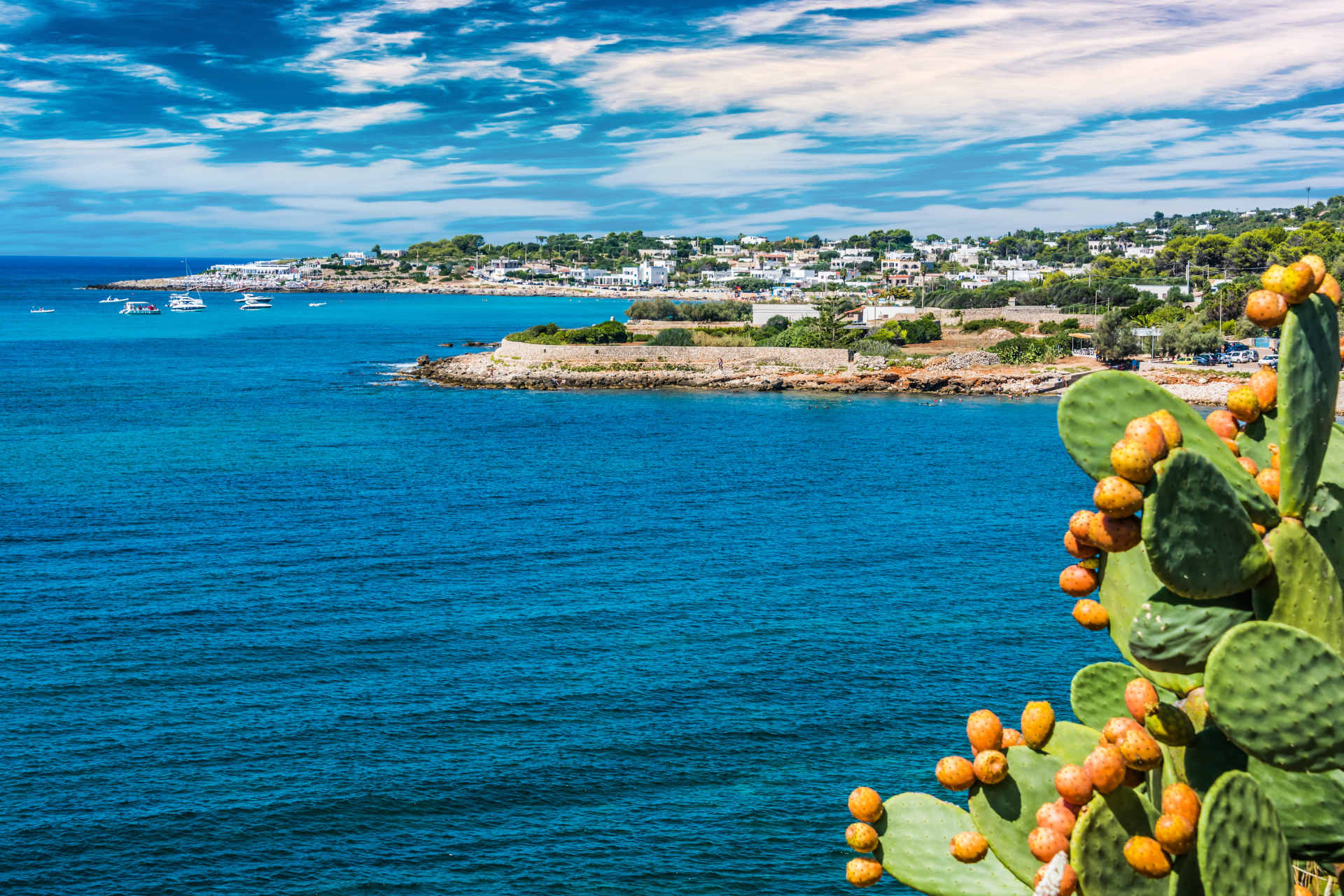
The charm of a road trip comes to life in the itineraries curated by Plenitude On The Road: original, inspiring long-distance journeys to be experienced strictly in electric mobility.
Our journey through the far south of Italy begins at the southernmost tip of Puglia, in Santa Maria di Leuca, where the waters of the Adriatic and Ionian Seas meet.
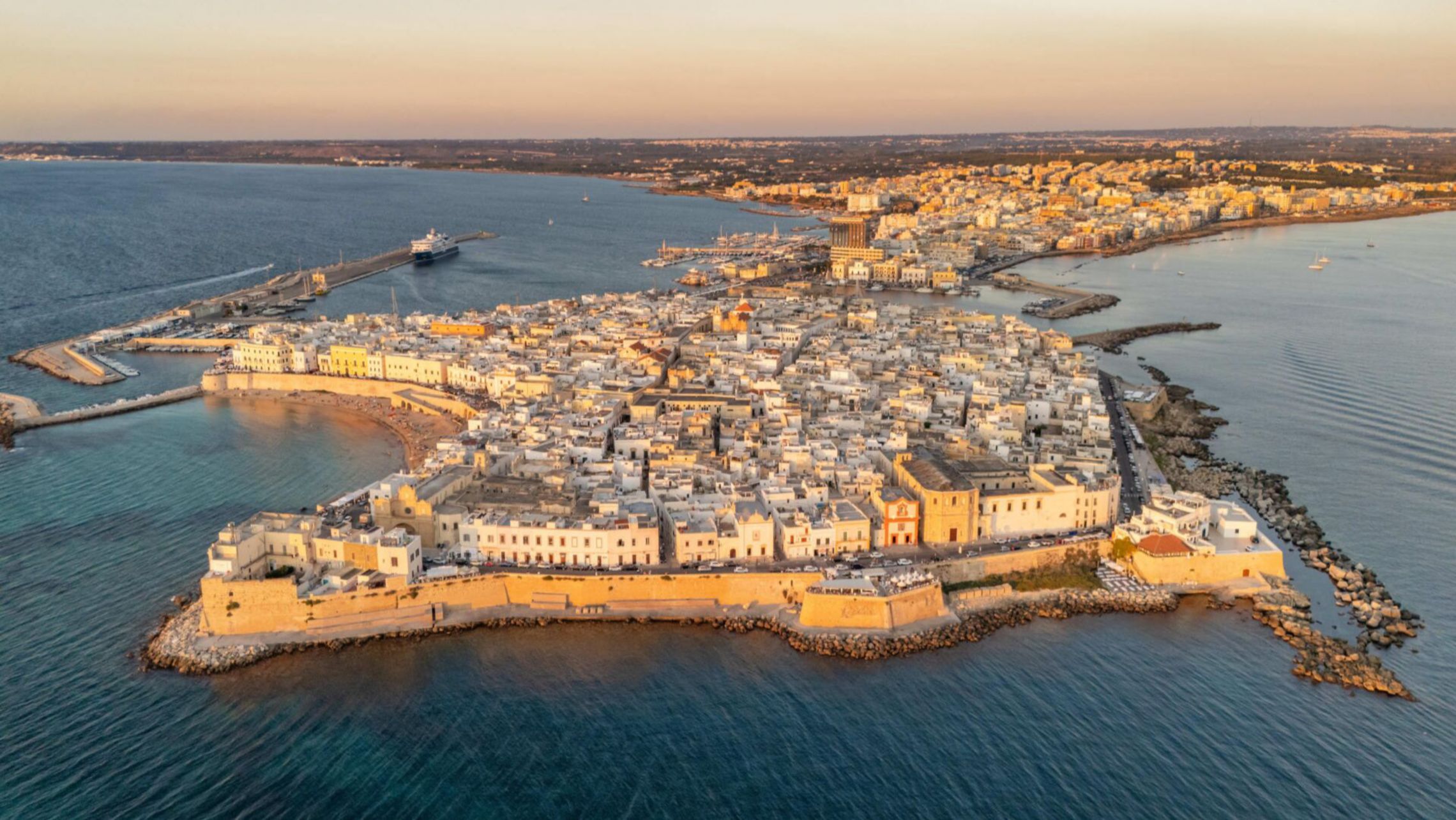
We follow the coastline and, after pausing to take in the endless turquoise sea, continue towards Gallipoli, one of the most renowned seaside destinations on the Ionian coast.
The old town stands on an island connected to the more modern part of the city. A stop here offers the chance to immerse yourself in the history and atmosphere of this corner of Salento, where picturesque narrow streets are lined with traditional limestone buildings, balconies and flower-filled terraces. Highlights include the Baroque Cathedral of Sant’Agata and Purità Beach, located right beside the historic centre.
We then set off for Nardò, around twenty minutes away along the SS101 Salentina road. After leaving the car at the charging station on Corso Italia, the historic centre can easily be explored on foot.
An important Byzantine centre for centuries, Nardò is home to Piazza Antonio Salandra, the heart of its Baroque old town, where streets and alleyways open out in every direction. Its striking architecture has provided the backdrop for several Italian and international films. Another must-see is the Church of Sant’Antonio da Padova, with its magnificent interiors decorated with stucco work and polychrome marble.
Once the car is fully charged, we continue towards Basilicata along provincial road SP359, passing Manduria, an area famous for its celebrated Primitivo di Manduria wine. Around forty minutes later, we arrive in Taranto, a major city and industrial centre in southern Italy. It is also known as the “City of Two Seas”, a reference to the Mar Grande and Mar Piccolo, which surround the old town.
After Taranto, the journey continues towards Metaponto, a coastal town in the municipality of Bernalda overlooking the Ionian Sea. The Ionian highway passes through fertile landscapes filled with citrus groves, apricot trees, peach orchards and vineyards.
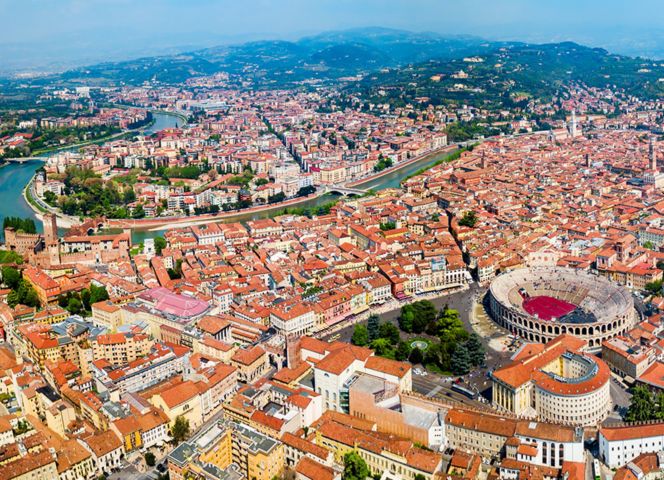
After leaving your car at the charging point in Piazzale XXV Aprile, in the southern part of the city, you can quickly reach the historic centre on foot. The itinerary begins at Verona’s most iconic and scenic spot: Piazza Bra, home to the Arena, the city’s true symbol.
Alongside the Arena, the square is enriched by elegant buildings such as the neoclassical Palazzo Barbieri, now the City Hall, and the Gran Guardia, a venue for exhibitions and cultural events.
Your walk through the historic centre continues along Via Giuseppe Mazzini, a lively pedestrian street filled with cafés, boutiques and shops, leading from Piazza Bra to the central Piazza delle Erbe.
Located in the heart of Verona’s historic centre, Piazza delle Erbe has always been the focal point of the city’s political and economic life. Its name comes from the fruit and vegetable market held here as early as the 14th century. Among its most curious features is the Arco della Costa, connecting Palazzo della Ragione to the Domus Nova. Hanging beneath the arch is a mysterious bone—possibly from a whale or an ichthyosaur—dating back to before 1750. According to legend, it will fall only when a truly just person passes beneath it.
A true celebration of architectural styles, the square is surrounded by historic buildings. Dominated by the Torre dei Lamberti, your walk continues past Palazzo della Ragione and Palazzo Maffei, a 17th-century Baroque gem, as well as the Domus Nova, once the residence of the Podestà, and the Casa dei Mercanti, symbol of the city’s guilds and trades.
To fully soak in the atmosphere of old Verona, a stop at Caffè Filippini is a must. Open since 1901, it is an integral part of the square’s identity. Just a short walk away, you’ll find Juliet’s House with its famous balcony.
Leaving Piazza delle Erbe behind, continue your walk towards Castelvecchio. Following Corso Porta Borsari and then Corso Cavour, you will quickly reach the city’s most beautiful monumental bridge. Built between 1354 and 1356 by order of Cangrande II, it stands out for its imposing structure, which has allowed it to withstand the powerful floods of the Adige River over time. Severely damaged during World War II, it was rebuilt according to its original design, which can still be admired today.
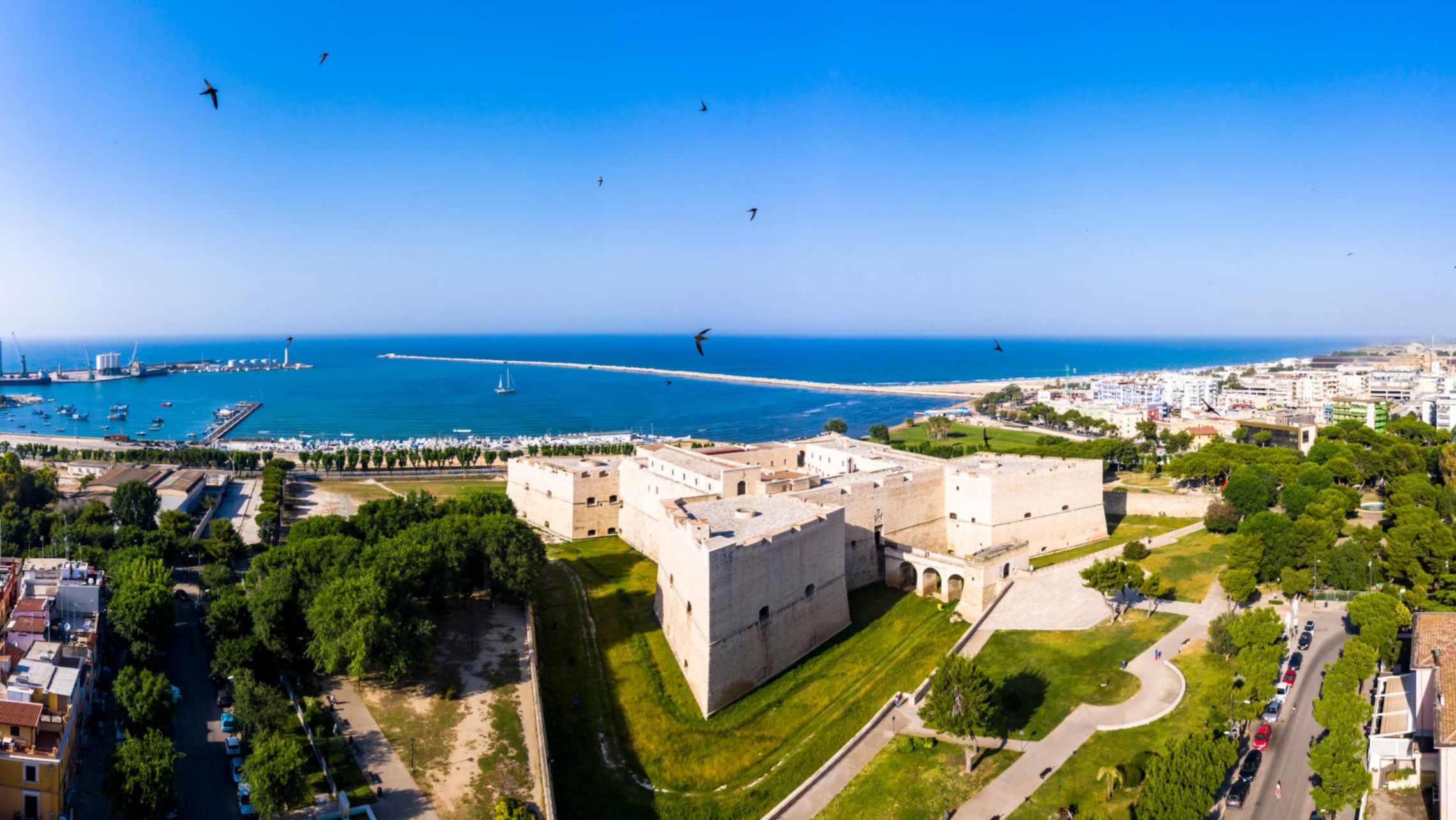
After charging the car near Metaponto beach, we set off once again, this time heading towards Calabria.
We pass Policoro, a charming town known for its crystal-clear waters, and continue for a few more kilometres before crossing the regional border into Calabria.
Soon after arriving, we turn inland, leaving the sea behind as we make our way towards Rocca Imperiale. Located close to the border with Basilicata, the village is well worth a visit thanks to its spectacular position on a hill. Its medieval houses rise in terraces along the slopes beneath the 13th-century Swabian Castle, offering extraordinary views across the Gulf of Taranto.
We then descend towards the coast and resume our journey through the far south of Calabria. The vast blue expanse of the sea accompanies us along the state road running beside the coastline of the province of Cosenza.
Continuing towards the province of Crotone, we eventually reach Cirò Marina, on the Crotonese Riviera, an area also renowned for Cirò DOC wine.
The second day of the itinerary ends here, surrounded by beautiful beaches, enchanting views and the promise of a generous dinner overlooking the sea.
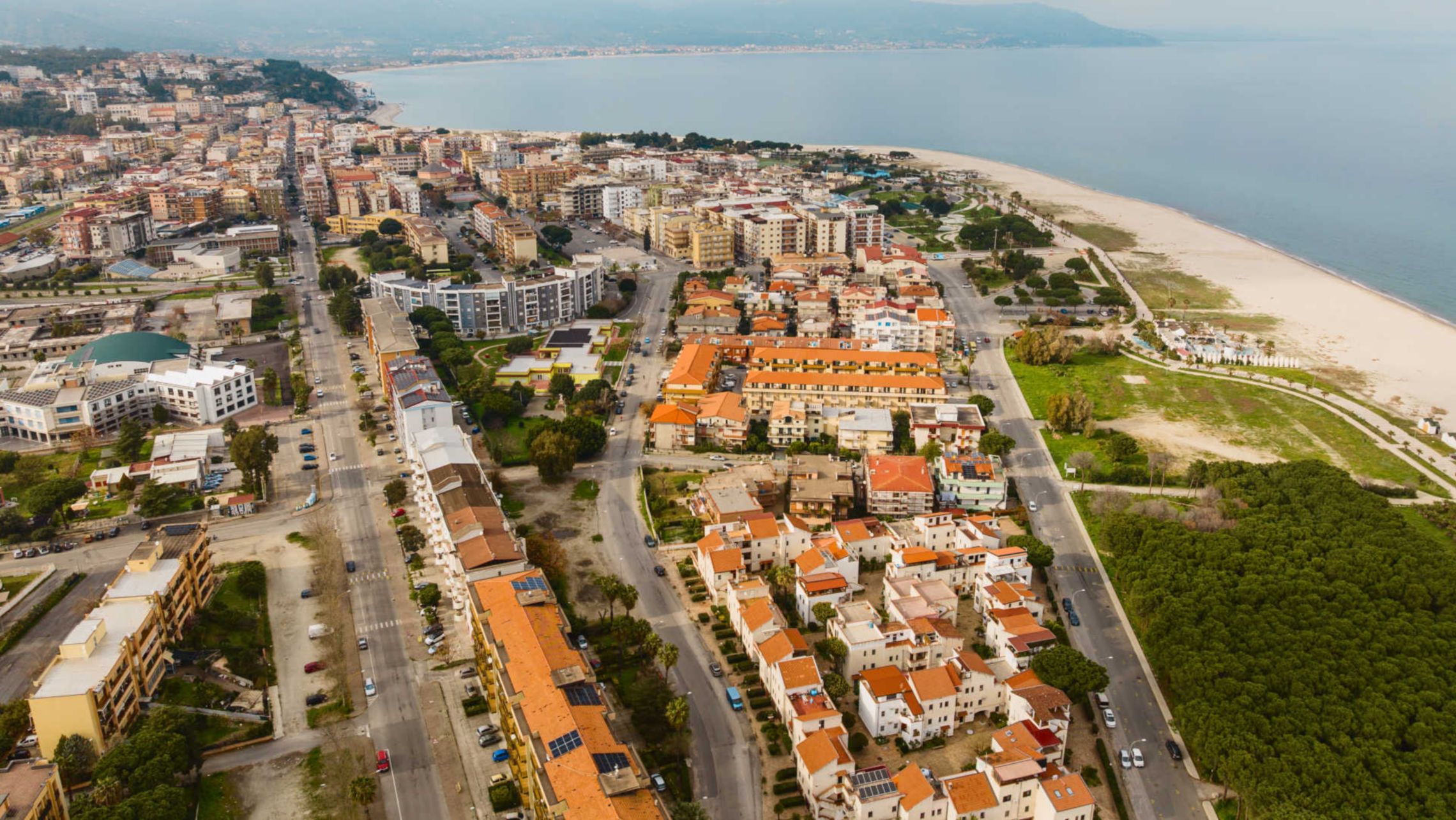
After collecting the car from the charging station on Via Roma in Cirò Marina, we set off for Reggio Calabria.
For a short stretch, the Ionian highway follows the coastline before turning inland through the countryside towards Crotone, an ancient city founded as a Greek colony in the 8th century BC.
We continue south for around half an hour, travelling away from the sea across the flat landscapes of the province of Crotone until we reach Le Castella, a captivating coastal village.
The defining feature of this corner of southern Italy is its castle in the sea, reached by following a narrow strip of land connecting it to the village. Its unique setting led director Mario Monicelli to choose it as a filming location for L’armata Brancaleone.
The fortress stands on foundations dating back to around 400 BC, although its present appearance is largely medieval. For centuries, it provided shelter for soldiers defending this stretch of coastline from attacks arriving by sea.
We continue towards Reggio Calabria and arrive in the popular resort of Soverato. Its bay is home to an important marine park inhabited by rare species, including pipefish, the Tonna galea mollusc and seahorses. From here, the road continues between seaside villages and towns perched high in the surrounding hills.
After around one hour and fifteen minutes, the ancient village of Gerace appears in the distance. Standing on a sandstone cliff 500 metres above sea level, it overlooks the Locride Valley.
A short climb from the coast leads into the village, where monumental churches, narrow streets, ornate gateways, small squares and elegant palaces come together around the magnificent Norman cathedral, built between 1080 and 1120.
As you stroll through the village in the warm Ionian breeze, you can stop at one of the local artisan workshops to buy a handmade ceramic piece or take a refreshing break with a traditional granita.
Leaving Gerace behind, we descend towards the sea and return to the road leading to Reggio Calabria.
The route follows the Jasmine Coast towards the southernmost part of the region, with the deep blue sea on the left and the mountains leading towards Aspromonte National Park on the right.
As we approach Reggio Calabria, Sicily finally comes into view across the water. The unmistakable outline of Mount Etna appears almost close enough to touch, providing a spectacular ending to this long journey along the Ionian coast.
There’s much more to discover!
Electric road trip between the provinces of Verona, Treviso and Belluno, exploring Verona, the city of love, to Cortina, the pearl of the Dolomites, with a stop in Treviso, the home of tiramisù.
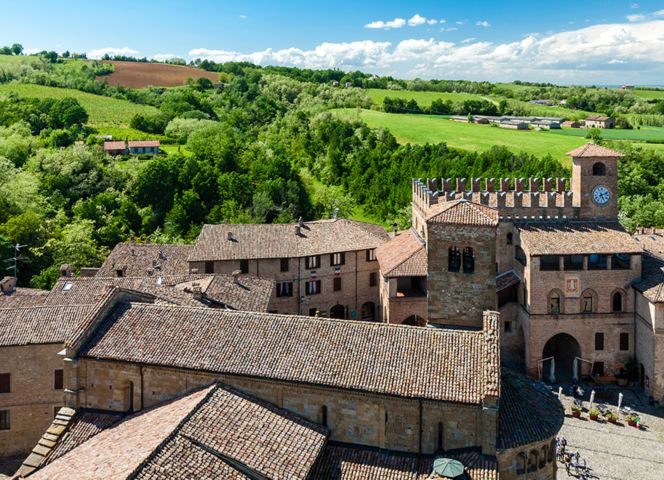
Electric road trip between the provinces of Piacenza and Parma, exploring art cities and captivating historic villages.
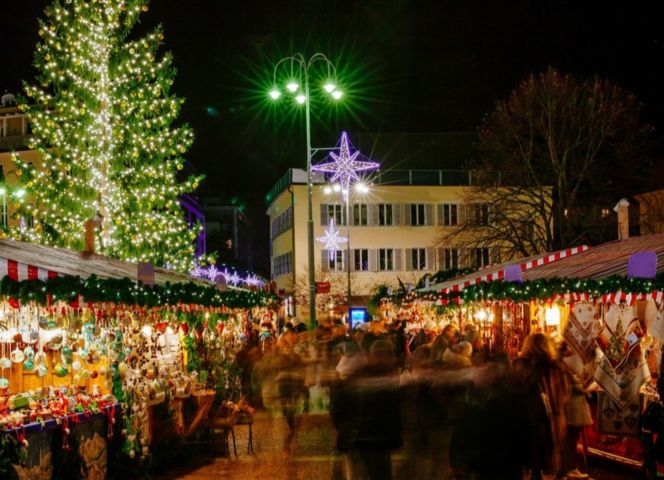
Christmas markets are a promise of intimate atmospheres and slow pleasures, an immersion in a fascinating tradition, and small wonders that bring out the child in us. And when a market becomes a travel destination, it also becomes a way to discover the su