From different charging methods to integration with home energy systems and recycling: an overview of the life cycle of batteries for electric mobility.
The electrification of transport is a key element in the evolution of urban and private infrastructure. At the heart of this transformation is the vehicle battery, an advanced technological component that goes far beyond simply storing energy. Understanding how it works, how it is charged and its life cycle is a useful step towards making more informed choices about both stored energy management and mobility.
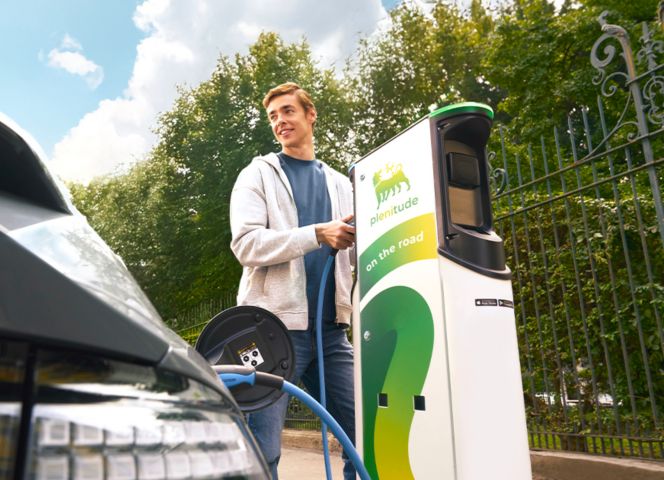
Charging: alternating current (AC) vs direct current (DC)
Battery wear and performance also depend on how the battery is charged. There are two main approaches, each meeting different mobility needs:
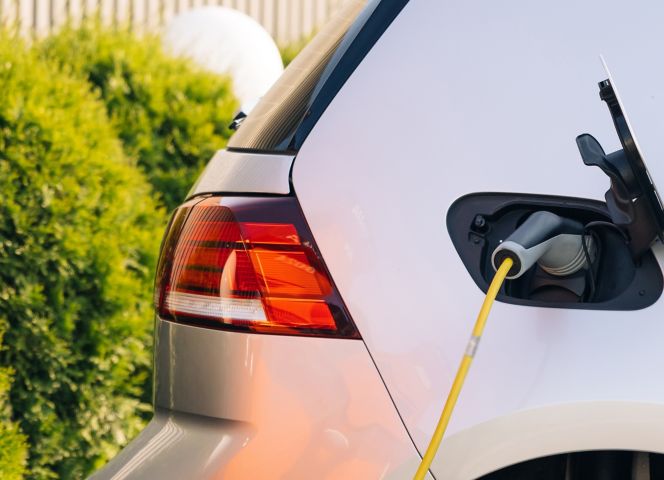
- AC charging (alternating current): uses standard mains voltage and operates at lower power levels. The physical limit on power intake is determined by the car’s onboard converter, which typically does not exceed 22 kW, or 7 kW per phase in three-phase systems. This method, ideal for home charging and longer stops, generates less heat within the cells’ internal components and may therefore have a positive effect on battery life over the long term.1
- DC charging (direct current): bypasses the limitations of the onboard converter, delivering energy directly to the battery at high power levels, with voltages ranging from 400 to 1,000 volts. To transfer this large amount of energy quickly without excessively increasing the current, which would cause the cables and equipment to overheat, the charging infrastructure raises the voltage. However, delivering such high power directly to the battery causes temperatures inside the cells to rise rapidly. For this reason, although essential for long journeys, exclusive and repeated use of DC charging subjects the battery chemistry to greater thermal stress than slow AC charging, contributing to slightly faster degradation over time. Naturally, degradation does not depend solely on the distinction between AC and DC charging: other factors also play a role, and its effects are not identical across all batteries.
Smart energy management at home and on the grid
Home charging offers the advantage of charging the vehicle while it is not in use. Unlike a standard portable charger, which simply sets a maximum power draw by communicating the electrical installation’s limits to the vehicle, a wallbox can incorporate advanced control functions. Some wallbox models can monitor household electricity consumption and adjust the power supplied to the car to prevent the home’s electricity supply from being overloaded, a technology known as smart load management. Some systems can also be programmed to optimise charging using energy generated by a home photovoltaic installation, activating when production exceeds the household’s needs.
Common misconceptions
Battery safety, chemistry and actual lifespan are frequently discussed topics. Here are some clarifications on safety, lifespan and recycling:
- Electric vehicle batteries catch fire easily
Electric vehicles are subject to stringent safety regulations. Onboard technical management is handled by the BMS (Battery Management System), a component that continuously monitors the battery, keeping it within safe operating parameters. If it detects anomalies or excessive temperature fluctuations, the BMS actively intervenes by reducing or stopping energy delivery, protecting the system against overloads, overheating and premature wear. Overall safety, however, depends on the combination of design solutions, protective devices and the conditions in which the vehicle is used. - You need to monitor the charge level to keep the battery healthy
Internal battery technologies are evolving rapidly. Until just a few years ago, batteries with NMC chemistry required care to keep the charge level between 10% and 80% to avoid excessive stress. Today, the growing use of LFP batteries has introduced batteries that are inherently more stable and less sensitive to these charge thresholds. - After a few years, the battery needs to be thrown away
One misconception is that batteries are components destined to wear out quickly. In fact, the useful life of an electric car battery can span several years, supporting the vehicle through much of its primary service life. This is also suggested by the recent 2024 study conducted by scientists at the SLAC-Stanford Battery Center, a joint centre established by Stanford University’s Precourt Institute for Energy and the SLAC National Accelerator Laboratory (read the study overview). Many manufacturers offer specific warranties for traction batteries, but actual lifespan and capacity retention must be assessed in relation to the individual model and its operating conditions. These depend on the battery chemistry, thermal management system, climate conditions, charge and discharge cycles, charging power and usage patterns. - Batteries cannot be recycled
When a battery loses the power delivery capability needed to propel a vehicle, it still retains enough capacity for a second life. It can be reused as a stationary energy storage system supporting electricity grids or renewable energy sources, where overall capacity matters more. Furthermore, key materials used to manufacture cells, such as lithium, nickel, manganese and cobalt in NMC chemistries, or iron and phosphorus in LFP batteries, do not degrade irreparably through use. These raw materials can be extracted and recovered at the end of the battery’s useful life and repeatedly reintroduced into the production cycle to manufacture new batteries.
Towards batteries that serve the grid
Battery management is not limited to the transport sector. It is a key element of overall energy management and will become increasingly important for grid flexibility and stability. The adoption of V2G (Vehicle-to-Grid) technologies aims to enable bidirectional communication: cars will not only draw energy from the grid, but will also be able to act as power sources, supplying external loads in an emergency or providing support services to the electricity grid, unlocking at least part of the considerable potential stored in parked vehicles.2
1 The AC charging standard with a Type 2 connector has a maximum limit of 32 A, equivalent to 22 kW for three-phase charging and 7 kW for single-phase charging.
2For further information: GSE, Vehicle-to-Grid and RSE’s V2G Laboratory factsheet.